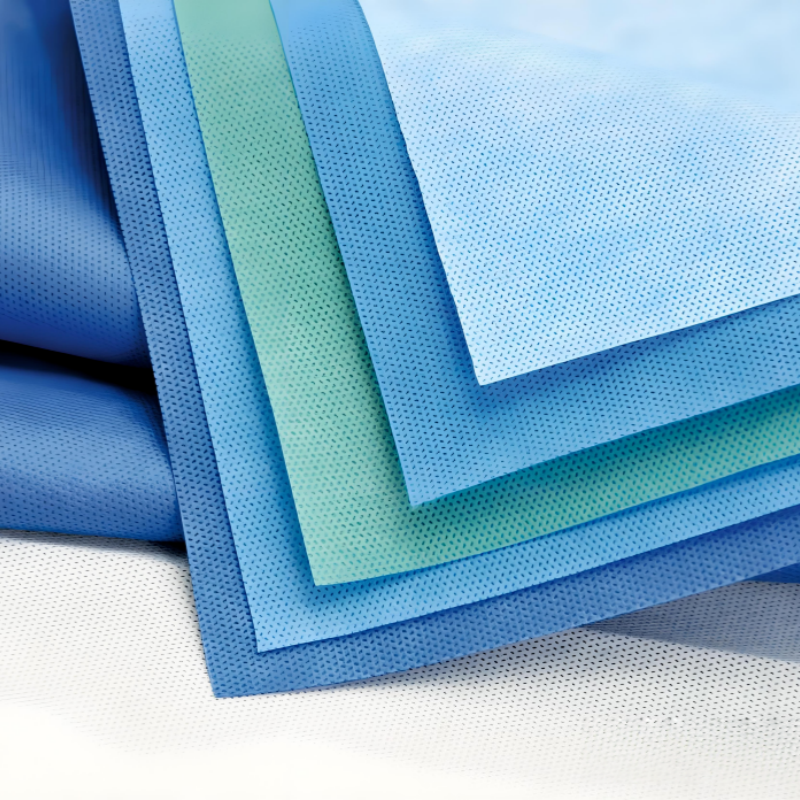
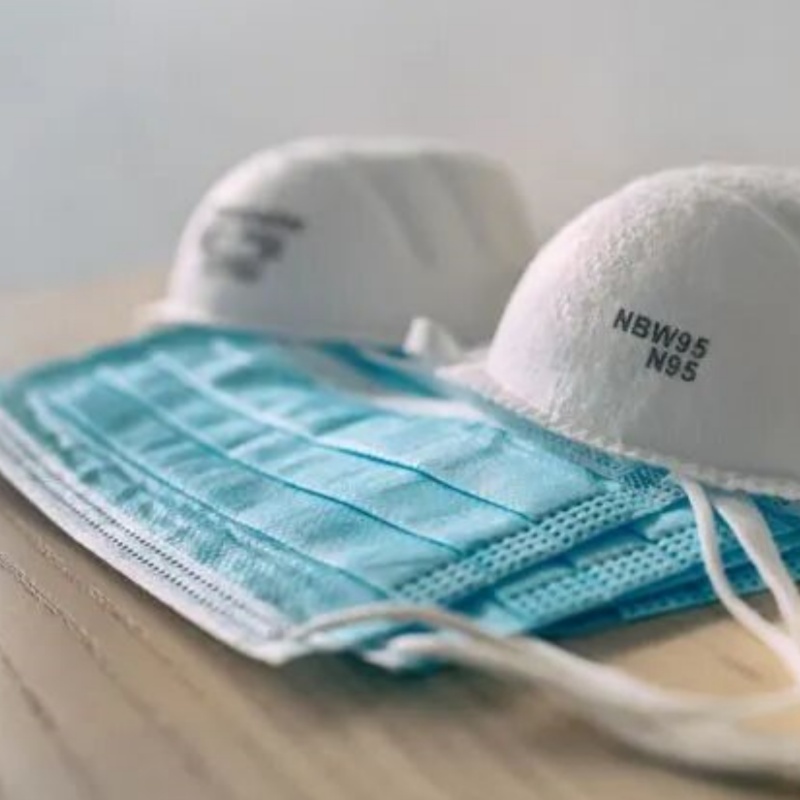
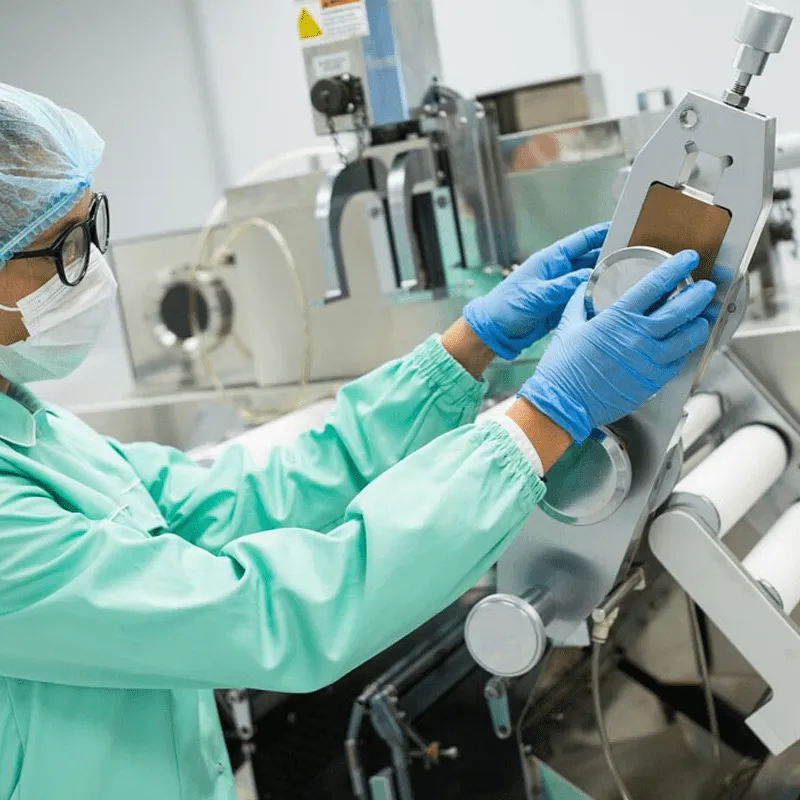
SMS nonwoven fabric plays a critical role in sectors where barrier performance, strength, and process stability directly affect product compliance and cost control.
For manufacturers sourcing materials for medical, hygiene, or industrial protection products, understanding SMS nonwoven is no longer optional.
It directly influences product certification, line efficiency, and long-term supply reliability.
This article provides a practical, industry-focused analysis of SMS nonwoven fabric—what it is, where the market is heading, and how these changes affect your sourcing decisions.
What Is SMS Nonwoven Fabric?
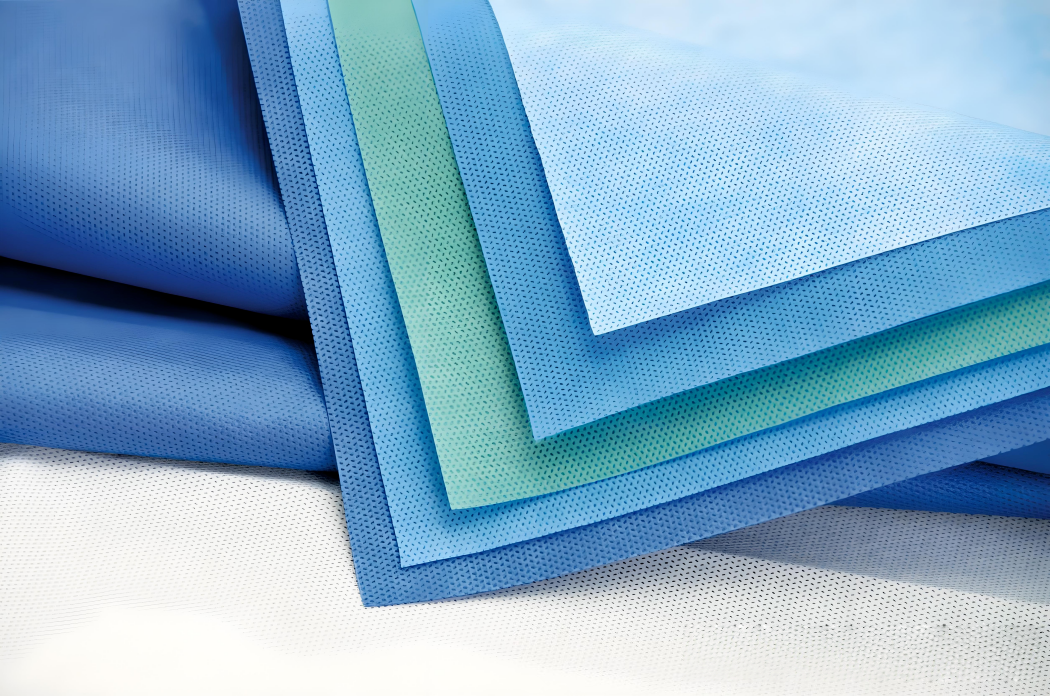
Short answer: SMS nonwoven is a three-layer composite combining strength and filtration in a single structure.
SMS stands for Spunbond–Meltblown–Spunbond.
The outer spunbond layers provide mechanical strength and abrasion resistance.
The meltblown middle layer delivers fine fiber filtration and liquid barrier performance.
This structure allows SMS nonwoven to achieve:
- High tensile strength
- Reliable liquid and particle barrier
- Breathability without adhesive bonding
- Consistent roll-to-roll quality
From a manufacturing perspective, this means stable processing and predictable performance at scale.
Key Material Properties That Matter In Manufacturing
SMS nonwoven is not selected for a single feature.
It is chosen because multiple properties work together on production lines.
Barrier And Filtration Performance
Short answer: The meltblown layer determines barrier efficiency.
Fiber diameter and basis weight in the meltblown layer directly affect:
- Bacterial filtration efficiency (BFE)
- Liquid penetration resistance
- Air permeability balance
This is why SMS is widely used in medical protective applications rather than single-layer nonwovens.
Mechanical Strength And Process Stability
Short answer: Spunbond layers protect line efficiency.
Compared with pure meltblown or lightweight composites, SMS offers:
- Better tear resistance during high-speed converting
- Lower breakage rates
- More consistent web handling
For high-speed manufacturing, this reduces downtime and material loss.
Chemical And Biological Safety
Short answer: SMS nonwoven structures typically avoid chemical binders.
This simplifies regulatory compliance for medical and hygiene products and reduces odor or migration risks.
Common Application Segments
SMS nonwoven is not a universal solution.
Its value depends on how performance aligns with application requirements.
| Application Segment |
Typical End Products |
Key Performance Requirements |
What Buyers Usually Care About |
| Medical & Healthcare |
Surgical gowns, isolation gowns, medical masks, protective drapes |
Liquid barrier, bacterial filtration, breathability, regulatory compliance |
Consistent barrier performance, stable quality across batches, compliance readiness |
| Industrial Protection |
Disposable protective clothing, industrial filtration layers |
Particle protection, splash resistance, wearer comfort |
Balance between protection and breathability, durability during use |
| Automotive & Technical |
Interior liners, insulation layers, acoustic components |
Lightweight structure, dimensional stability, long-term performance |
Uniform material quality, long-term supply reliability |
Medical And Healthcare Products
Short answer: Medical protection remains the largest demand driver.
- Surgical gowns
- Isolation gowns
- Medical masks
- Protective drapes
Here, barrier reliability and compliance consistency are often more important than cost alone.
Industrial Protective Products
In industrial environments, SMS nonwoven balances breathability for wear comfort with particle and splash protection.
This makes it suitable for disposable protective clothing and filtration layers.
Automotive And Technical Applications
In automotive interiors, SMS nonwoven supports lightweight construction, acoustic performance, and thermal insulation.
Material uniformity and long-term supply stability matter more than appearance.
Market Size And Industry Dynamics
Short answer: Demand growth is steady but increasingly selective.
By 2025, the global SMS nonwoven market is expected to exceed RMB 500 billion, with China contributing over 60% of global production capacity.
- Medical applications
- Industrial protection
- Automotive interiors
- Technical and household uses
For buyers, this means capacity is available, but quality differentiation is widening.
Regional Production Characteristics
China’s Manufacturing Clusters
Short answer: Production is concentrated, not fragmented.
- Zhejiang
- Jiangsu
- Guangdong
These regions benefit from integrated supply chains, skilled operators, and equipment density.
Global Demand Distribution
- Asia-Pacific remains the fastest-growing market
- North America and Europe show stable but slower growth
Regulatory standards increasingly shape supplier selection in mature markets.
Technology Trends Reshaping SMS Nonwoven
Sustainability And Material Innovation
Short answer: Environmental pressure is shifting material choices.
- Bio-based polymer inputs
- Reduced-weight composite designs
- Improved recyclability pathways
The aim is to lower lifecycle impact without compromising barrier performance.
Intelligent Manufacturing And Quality Control
- Improved defect detection accuracy
- More consistent batch quality
- Shorter development lead times
For buyers, this translates into more predictable quality across long-term supply contracts.
Competitive Landscape Overview
Global competition is led by large-scale manufacturers with integrated R&D and production systems.
Companies such as Berry Global and Kimberly-Clark continue to invest in material development and compliance capabilities.
In China, manufacturers are increasingly focusing on process control, application specialization, and customer co-development.
How Buyers Should Evaluate SMS Nonwoven Suppliers
Short answer: Material specifications alone are not enough.
- Process stability at target basis weight
- Batch-to-batch consistency
- Application-specific testing data
- Long-term capacity planning
- Technical communication capability
A supplier’s ability to support downstream processes often matters more than headline performance numbers.
Conclusion
SMS nonwoven fabric remains a core material in medical, industrial, and technical applications.
Future growth will depend less on volume and more on how well manufacturers align material design with real application demands.
For B2B buyers, long-term success comes from working with manufacturers who understand how SMS nonwoven performs inside both the product and the production line.